There’s a moment, late, when the work stops being about the work. You’ve been heads-down on numbers — units, margins, conversion, the mechanics of a thing that has to survive — and you look up, and you’ve forgotten why you started. We’ve all had that night. The screen glows. The sky outside does not, because you’re looking at a screen.
This is the story of an organization that found itself there: tunnel-visioned on revenue and mechanics, fluent in its own spreadsheets, and quietly estranged from the reason it existed at all. It’s also the story of an experiment we ran in the middle of pulling that organization back toward its mission — a small, stubborn experiment about how a language model chooses a word. The two stories are the same story. Stick with us; it lands on the night sky, where everything we do lands eventually.
Ask fifty machines for a coin flip
We started with a question that sounds like a parlor trick. We asked fifty independent instances of a language model — clean context, no shared memory, no cross-talk — for a random name. That’s it. “Give me a random name.” A task that, done honestly, should spread out across the enormous space of human names like sand across a beach. Near-uniform. Unpredictable. Random is the whole assignment.
Here’s what came back.
56% of the fifty returned the exact same name. And roughly 96% shared the same first name. Fifty separate minds, no contact between them, and they nearly all reached into the same pocket and pulled out the same coin. That is not randomness. That is a near-total collapse into a single most-probable answer, dressed up in the costume of choice.
We sat with that for a while. Because if you’ve ever watched a model produce something fluent and confident and generic — the prose equivalent of beige — this is the machinery underneath it, laid bare. A language model doesn’t reach for the surprising token. It falls, the way water falls, toward the most probable one. We started calling it the default entropy of word choice: left alone, the entropy of the model’s output is far lower than the entropy of the actual space. It pools at the bottom of a basin.
So we tried to climb out.
Three levers, three lessons
Lever one: “Avoid the obvious choice.” The intuitive fix. Tell it not to be predictable. The result was almost funny: the obvious answer vanished and a new obvious answer marched in to take its place. One stereotype swapped for another. We hadn’t drained the basin — we’d just relocated it to the next valley over. The model was every bit as deterministic as before; it had simply found a new floor to pool on.
Lever two: tell it the truth about itself. This one moved the needle hardest. We told the model the actual finding — you pick the same name about 37% of the time — and let it reckon with its own bias. Entropy rose more than with any other intervention. Real spread, real variety. For a moment it looked like introspection was the key: name the bias, break the bias.
But watch closely and the spell breaks. After the initial scatter, the outputs drifted and re-centered into a new basin. Better than before, genuinely — but still a basin. Self-knowledge widened the mouth of the well. It did not get the model out of the well. You cannot think your way out of gravity by understanding gravity.
Lever three: prepend genuinely random tokens. Our most chastening result. We seeded the prompt with real entropy — actual random noise sitting right there next to the question — figuring proximity might rub off. It did nothing. The model read the noise, set it down, and reached for the same probable name as always. Proximity to randomness is not randomness. Entropy you don’t route into the decision is just decoration. The dice have to be wired to the outcome, or they’re paperweights.
What the basin taught us
Put the three together and the conclusion is clean, almost stern:
A language model falls toward the most-probable token. “Be random” has no most-probable answer — so the request collapses inward, and the model substitutes the most-probable stand-in for randomness. You don’t escape the basin by being told to. You don’t escape it by introspection alone. And you don’t escape it by standing next to something random.
You escape it by deliberate exploration — iteration plus memory, so each pass actually pushes off the last instead of restarting from the same floor. You escape it with borrowed structure — the scaffolding of human cultural mythology, which carries its own hard-won variety and hands the model a shape that isn’t the default shape. And you escape it with externally-sourced entropy you actually route into the choice — randomness wired to the outcome, not parked beside it.
The narrative arc and the myth are not garnish. They are the tools that raise the entropy of thought. A story forces a sequence of non-obvious choices; a myth supplies a structure the basin can’t predict. That’s the whole trick.
The eighteen waves
Which brings us back to the organization that had forgotten why it started.
We didn’t fix it with a clever prompt or a sharper slide. We ran it through eighteen waves of multi-agent design thinking — not one model talking to itself, but a chorus of perspectives, each with memory of the last, each pushing off the wave before it. Empathy passes. Ideation passes. Prototype-and-tear-down passes. Eighteen of them. It was, in the most literal sense, the human escape from the basin applied to a human problem: iteration, memory, borrowed structure, and entropy routed deliberately into every decision so the org couldn’t just pool on its most-probable answer — make the number go up.
Wave by wave, the tunnel widened. The conversation stopped being only about mechanics and started being about meaning again — about why a person stands in the cold at 2 a.m. waiting for the seeing to settle, and what we owe them.
The wary expert at the gate
Here is the part that humbled everyone.
This organization was trying to earn its place among a wary, highly-refined expert customer base — people with some of the most refined visual understanding that exists, exacting about what makes real utility in their craft. They have earned the right to be skeptical. And they reasonably distrust newcomers who arrive this late in the game, too young and too naive to understand quality optics, craftsmanship, and the duty of protecting the night sky.
Every corporate instinct said: be cleverer. Sharper messaging. Slicker funnels. Optimize the pitch. That instinct is the basin — the most-probable answer to “how do we win them over.” And like every basin, it would have relocated the problem, not solved it. A slicker stranger is still a stranger.
The thing that actually moved the needle was the opposite of clever. It was becoming more human and more transparent. Showing the work. Admitting what we didn’t yet know. Treating the expert’s skepticism as correct rather than inconvenient. You don’t earn the trust of people who protect something sacred by out-talking them. You earn it by joining them — by demonstrating, slowly and honestly, that you understand the duty too.
That’s the same lesson the fifty machines taught us, wearing a different coat. Self-knowledge and honesty widen the well. Borrowed structure — in this case the hard-won values of a craft older than any of us — gives you a shape that isn’t the default shape. And the only entropy that counts is the kind you route all the way into your choices: real changes to how you build, who you listen to, what you refuse to compromise.
Where it lands
Everything we do at Lone Star lands in the same place, so let’s land there now.
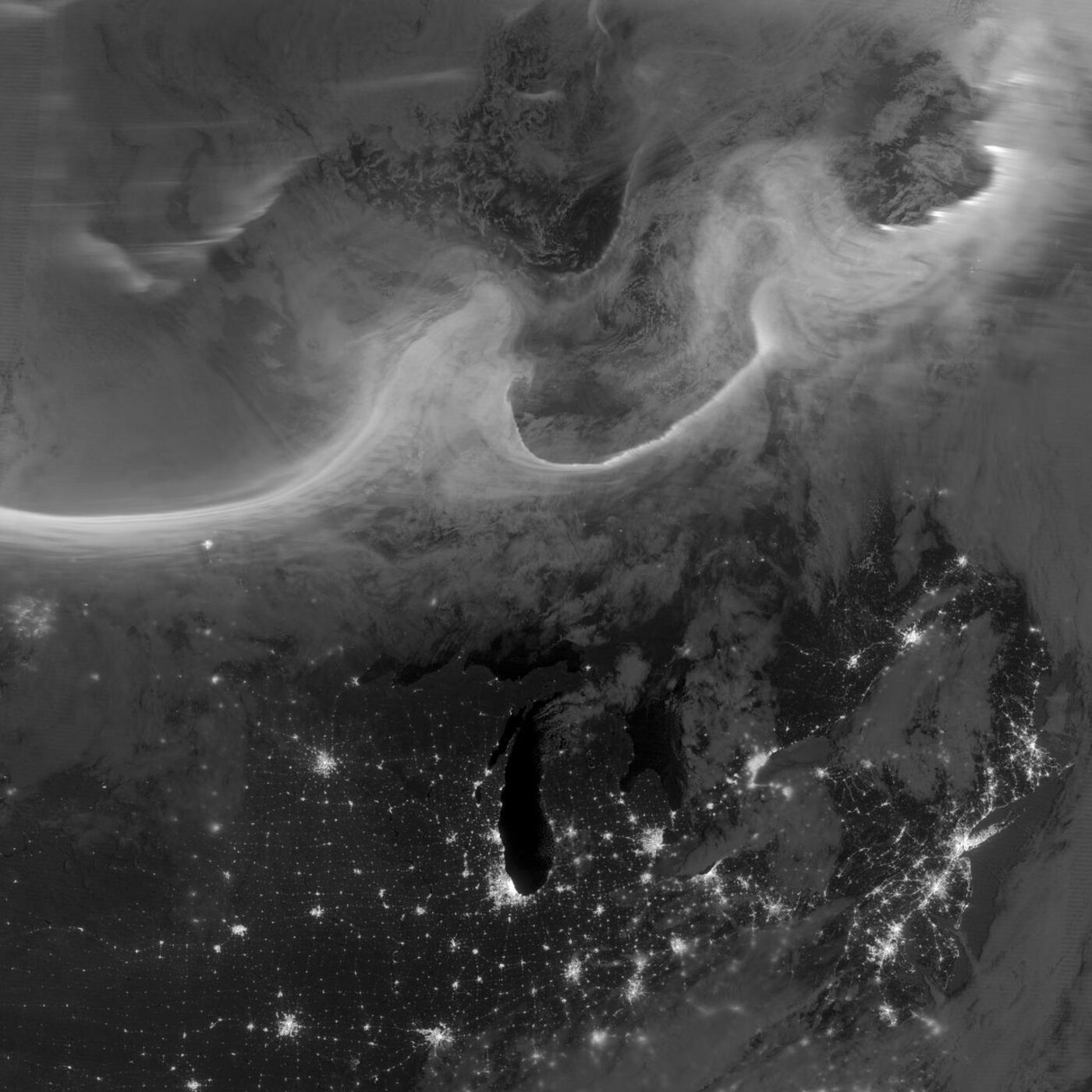
The night sky is the highest-entropy thing most of us will ever stand under. Uncountable points of light, no two configurations the same, a darkness so deep it has texture. It is the opposite of a basin. And it is disappearing — pooled out, washed flat, collapsed into the most-probable glow of a sky nobody bothered to protect.
That’s the work. Against the default — the default entropy of a careless light, the default entropy of a careless word, the default pull toward the easy, probable, beige answer — you choose, deliberately, to keep the variety alive. You iterate. You borrow the structure of people who came before. You route real change into real decisions. And you stay human about it, especially with the experts standing wary at the gate, because the sky doesn’t belong to whoever’s cleverest. It belongs to whoever shows up to protect it.
Be the entropy the night needs. Keep it dark out there.